Your Guide to East Africa
Everything you need to know before you go — destinations, visas, health, climate, culture, and more.
Overview
East Africa is one of the world's most extraordinary travel destinations — a vast, diverse region stretching from the volcanic peaks of Rwanda and Uganda, across the sweeping savannahs of Kenya and Tanzania, down to the spice-scented islands of Zanzibar and the pristine beaches of the Kenyan coast.
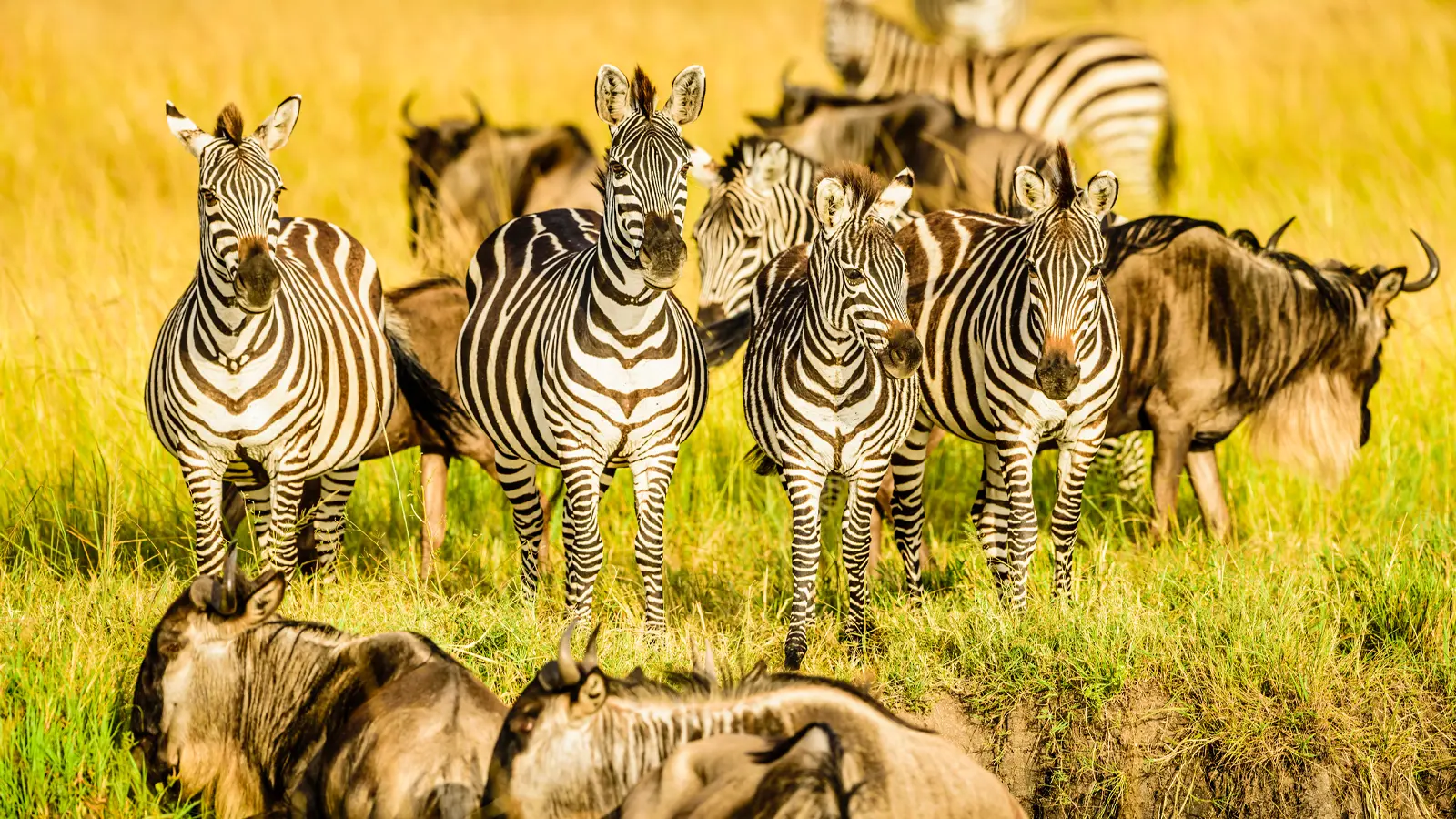
The region encompasses some of the most iconic wildlife habitats on earth, including the Serengeti, Masai Mara, Ngorongoro Crater, Amboseli, and Bwindi Impenetrable Forest — home to the endangered mountain gorilla. Beyond wildlife, East Africa offers ancient cultures, UNESCO World Heritage sites, legendary hospitality, and landscapes that range from snow-capped mountains to coral reefs.
Whether you're tracking the Great Migration, trekking to see mountain gorillas, climbing Kilimanjaro, or unwinding on a powder-white beach, East Africa delivers an experience unlike anywhere else on the planet.
Key Destinations
🇰🇪 Kenya Gateway to East Africa
🇹🇿 Tanzania Home of the Serengeti & Kilimanjaro
🇺🇬 Uganda The Pearl of Africa
🇷🇼 Rwanda Land of a Thousand Hills
🏝️ Zanzibar The Spice Island
Best Time to Visit
East Africa can be visited year-round, but timing your trip around the seasons and key wildlife events dramatically enhances the experience.
The best time for wildlife viewing. Vegetation is sparse, animals concentrate around water sources, and the Great Wildebeest Migration river crossings peak from July to September in the Masai Mara. Gorilla trekking conditions are ideal. Expect higher prices and larger crowds.
An excellent time to visit — fewer tourists, lower prices, and still good wildlife viewing. Calving season in the Serengeti (January–February) means thousands of wildebeest calves and hungry predators. Beach destinations on Zanzibar and the Kenya coast are at their best.
The green season brings lush landscapes, dramatic skies, and excellent birdwatching. Prices are at their lowest. Game viewing can still be rewarding — animals are active and vegetation creates beautiful backdrops. Some remote roads may become difficult. Not ideal for beach holidays on the Indian Ocean coast.
Visas & Entry Requirements
🇰🇪 Kenya
🇹🇿 Tanzania
🇺🇬 Uganda
🇷🇼 Rwanda
Note: Visa regulations change frequently. Always verify current requirements with the relevant embassy or official government portal before travel. Our team can advise on the latest entry requirements for your nationality.
Health & Vaccinations
Consult your doctor or a travel health clinic at least 6–8 weeks before departure. Requirements and recommendations vary by nationality and itinerary.
Required
- •Yellow Fever: Certificate required if arriving from a country with yellow fever risk. Some countries (e.g. Rwanda, Uganda) require it for all travellers.
Recommended
- •Typhoid
- •Hepatitis A & B
- •Cholera (if visiting remote areas)
- •Meningitis (especially Uganda/Rwanda)
- •Rabies (for extended stays or animal contact)
Malaria
Travel Insurance
Climate
East Africa straddles the equator, giving it a tropical climate with distinct wet and dry seasons rather than the four-season cycle of temperate regions. Temperatures are broadly stable year-round, moderated by altitude.
Savannahs & Game Parks
20–30°C
Hot days, cool nights. Carry a light jacket for early morning game drives.
Highlands (Nairobi, Kigali)
12–25°C
Pleasant and temperate year-round. Evenings can be cool.
Coast & Zanzibar
25–35°C
Hot and humid. Two monsoon seasons (April–May and October–November).
Mountain Trekking (Kilimanjaro, Bwindi)
-10–20°C
Highly variable with altitude. Cold, wet, and misty at higher elevations. Full layering system required.
Culture & Customs
Languages
Religion & Sensitivity
Greetings & Etiquette
Tipping
Photography
Money & Budget
Kenya
Kenyan Shilling (KES)
USD widely accepted at tourist establishments. ATMs plentiful in cities.
Tanzania
Tanzanian Shilling (TZS)
USD required for national park fees and most safari costs. Crisp, undamaged notes preferred.
Uganda
Ugandan Shilling (UGX)
USD commonly used for major purchases. Exchange at banks or forex bureaux — avoid street changers.
Rwanda
Rwandan Franc (RWF)
Cards widely accepted in Kigali. ATMs available. USD exchangeable at banks.
- 🏕️ Budget backpacker: USD $50–100 (hostels, public transport, basic meals)
- 🏨 Mid-range: USD $150–300 (comfortable lodges, guided tours)
- 🌿 Luxury / tented camps: USD $400–1,200+ (exclusive camps, private guides, all-inclusive)
Getting There
Main International Airports
- Nairobi (NBO) — Jomo Kenyatta International Airport. The most connected hub in East Africa, with direct flights from London, Amsterdam, Dubai, Doha, and major African cities.
- Dar es Salaam (DAR) / Kilimanjaro (JRO) — Tanzania's main international gateways. JRO is often preferred for Northern Circuit safaris.
- Entebbe (EBB) — Uganda's international airport, 40km from Kampala.
- Kigali (KGL) — Rwanda's modern, efficient international airport. RwandAir operates as a growing African hub.
- Zanzibar (ZNZ) — Direct seasonal charter flights from Europe. Otherwise connect via Dar es Salaam.
Getting Around the Region
What to Pack
Clothing — Safari
- Neutral-coloured clothing (khaki, olive, beige)
- Long-sleeved shirts & trousers for evenings
- Light fleece or jacket for morning game drives
- Wide-brimmed hat & sunglasses
- Comfortable walking shoes or boots
Clothing — Beach
- Lightweight cottons and linens
- Modest cover-ups for villages & mosques
- Reef-safe sunscreen
- Water sandals & flip-flops
- Rash vest for snorkelling
Health & Hygiene
- Antimalarial medication
- DEET insect repellent (50%+)
- Rehydration sachets
- Hand sanitiser & wet wipes
- Personal prescription medications (with letter)
Tech & Documents
- Universal travel adapter (Type G for Kenya/Uganda, Type D/G for Tanzania)
- Portable power bank
- Copies of passport, visa & travel insurance
- Yellow fever certificate
- Binoculars (essential for game viewing)
In This Guide
Ready to Go?
Let our expert team build you a tailor-made East Africa itinerary — safaris, gorilla treks, beach time, and everything in between.
Request a Free Quote Browse DestinationsExplore Destinations
Start Planning Your East Africa Adventure
Our team of safari specialists is ready to turn this guide into your reality. Every itinerary is tailored to you — your interests, your pace, your budget.