Ask anyone who has ever been on an African safari what they were hoping to see, and chances are the answer involves two words: the Big Five. This iconic collection of five of Africa's most magnificent animals has defined the safari experience for generations of travellers. But what exactly are the Big Five, where does the term come from, and where in Kenya can you find them? Here is everything you need to know before you go.
The Origin of the Term "Big Five"
The term "Big Five" was not coined by conservationists or tourism boards — it was coined by big game hunters in the colonial era. The lion, leopard, elephant, buffalo, and rhino were classified as the most dangerous and difficult animals to hunt on foot in Africa. They were not the biggest animals (the hippo and the giraffe are both larger than the leopard, for instance), but they were the most formidable, the most unpredictable, and the most likely to fight back.
Today the term has been completely repurposed. The gun has been replaced by the camera lens, and the Big Five are now the most sought-after animals to photograph on safari. Kenya, as one of the finest wildlife destinations on earth, is one of the best places in the world to see all five — and in many cases, all in a single game drive.
The Lion — King of the Savannah
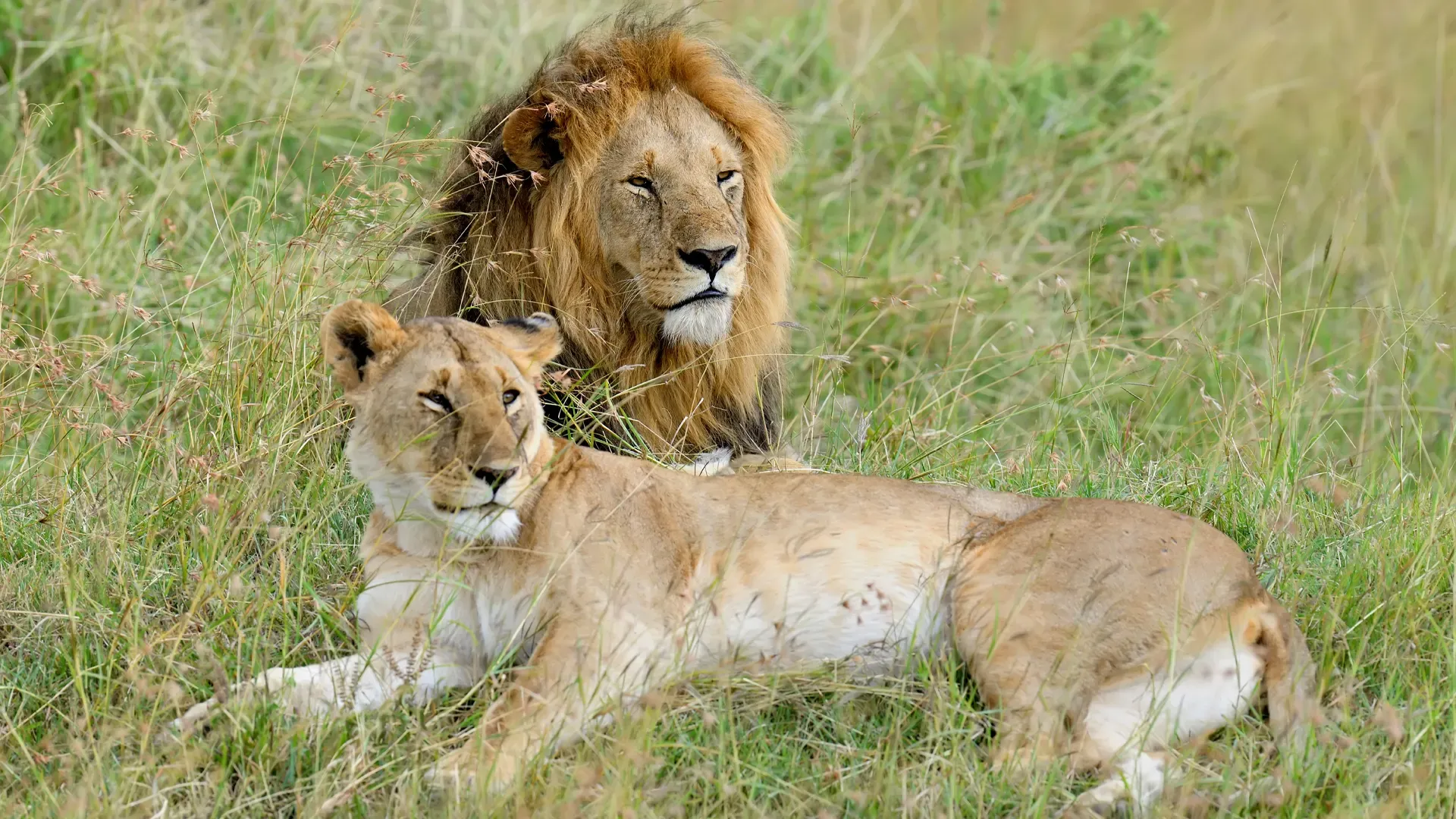
The African lion is the most immediately thrilling of all the Big Five. There is something that speaks directly to a primal part of the human brain when you encounter a lion at close range — the sheer power, the calm authority, the indifference with which they regard your vehicle. Lions are the only truly social big cats, living in family groups called prides that can number up to 30 individuals.
Kenya's lions are among the most studied and photographed in the world. The Maasai Mara is home to some of Africa's most famous lion prides, and pride dynamics — cubs playing, males sparring, females hunting at dusk — play out daily in full view of safari vehicles. Lions spend up to 20 hours a day resting, which means the drama tends to be concentrated into dawn and dusk game drives when they are most active.
Where to see them in Kenya: Maasai Mara, Amboseli, Tsavo, Samburu, Nairobi National Park.
The Leopard — The Most Elusive of the Five
Of all the Big Five, the leopard is the one that most often eludes even experienced safari-goers. These solitary, supremely secretive cats are masters of camouflage, spending their days draped over tree branches or hidden in thick undergrowth, waiting for night to fall before they move and hunt. Spotting a leopard on safari requires a sharp-eyed guide, patience, and more than a little luck.
When you do find one, the reward is extraordinary. The leopard is arguably the most beautiful of Africa's big cats — its golden coat marked with distinctive rosettes is unlike anything else in the animal kingdom. Kenya's leopards are increasingly habituated to vehicles in certain reserves, meaning sightings can be extraordinarily intimate.
Where to see them in Kenya: Maasai Mara (particularly the Mara Triangle and private conservancies), Samburu, Laikipia.
The Elephant — The Greatest Land Animal on Earth
Standing before an African elephant — the largest land animal on earth — is a profound experience. These extraordinary creatures, capable of weighing up to 7,000 kilograms, are also among the most emotionally complex and intelligent animals we share the planet with. Elephants grieve their dead, demonstrate empathy, use tools, communicate across vast distances using infrasound, and maintain intricate social structures centred around matriarchal family units.
Kenya is a paradise for elephant lovers. Amboseli National Park is home to some of Africa's largest elephant herds and the world's longest-running elephant research project. The elephants here are highly habituated to vehicles and can be observed at breathtakingly close range. The Tsavo ecosystem supports the largest elephant population of any park in Kenya, while the Maasai Mara regularly delivers impressive breeding herds crossing the open plains.
Where to see them in Kenya: Amboseli, Tsavo East & West, Maasai Mara, Laikipia, Samburu.
The Cape Buffalo — The Most Dangerous of the Five
Do not be fooled by the fact that the buffalo is a bovine — a cousin of the humble cow. The Cape buffalo is widely considered the most dangerous of the Big Five, responsible for more human fatalities in Africa than any of the others. An adult male can weigh over 800 kilograms, moves with alarming speed, and when threatened will charge without hesitation. Old solitary males — called "dagga boys" — are particularly unpredictable and aggressive.
On safari, however, Cape buffalo are magnificent subjects. Herds of several thousand animals moving across the plains create an extraordinary spectacle. Their relationship with cattle egrets — white birds that perch on their backs feeding on ticks and insects — is one of nature's most charming partnerships. Buffalo are also frequently targeted by lions, and predator-prey interactions involving buffalo are among the most dramatic wildlife encounters a safari can deliver.
Where to see them in Kenya: Maasai Mara, Tsavo, Lake Nakuru, Nairobi National Park, Aberdares.
The Rhino — Africa's Most Endangered Giant
Of all the Big Five, the rhino is the one whose future is most uncertain, and seeing one in the wild carries an emotional weight that the others do not. Both species found in Kenya — the black rhino and the white rhino — are classified as critically endangered or near-threatened, the victims of decades of relentless poaching driven by the illegal trade in rhino horn.
Kenya has been at the forefront of rhino conservation efforts in Africa, and today protected populations exist in several key locations. The black rhino is the more elusive of the two — a solitary, browsers that tends to emerge at dawn and dusk and relies heavily on smell rather than sight. The white rhino is more social and is often seen in small groups grazing on open grassland. Seeing either species on safari is a privilege that connects you directly to the global conservation story.
Where to see them in Kenya: Lake Nakuru (both species), Ol Pejeta Conservancy (the best rhino viewing in Kenya, including the last two northern white rhinos on earth), Nairobi National Park, Lewa Wildlife Conservancy.
Tips for Maximising Your Big Five Sightings
Do early morning and late afternoon game drives. The Big Five — particularly lion, leopard, and rhino — are most active in the cooler hours of the day. The golden light of dawn and dusk also makes for spectacular photography.
Choose the right parks. Not all parks offer equal chances for all five. Lake Nakuru and Ol Pejeta are your best bets for rhinos. Maasai Mara gives you the best all-round Big Five game viewing. Amboseli is unbeatable for elephants.
Listen to your guide. The best safari guides have an encyclopaedic knowledge of animal behaviour, tracks, and the specific territories of individual animals within a reserve. Trust their instincts.
Stay multiple nights. A single day in a park rarely delivers all five. Two to three nights in a good reserve significantly increases your chances of a complete Big Five experience.
Bring good binoculars. Even when animals are at a distance, quality binoculars transform a distant dot into a full and detailed encounter.
See the Big Five with Pin Holidays & Safaris
Ticking off the Big Five is a deeply personal and thrilling safari milestone, and we believe it should be done in the very best way possible. At Pin Holidays & Safaris, we design our safaris around giving you the very best chance of extraordinary wildlife encounters, with experienced guides who know these animals, these parks, and these habitats intimately.
We'll help you choose the right combination of parks and conservancies, the best time of year for your travel dates, and the accommodation that puts you closest to the action. Whether you're chasing your first lion or hoping to finally tick off that elusive leopard, we are here to make it happen.
Your Big Five adventure starts at pinsafaris.com.